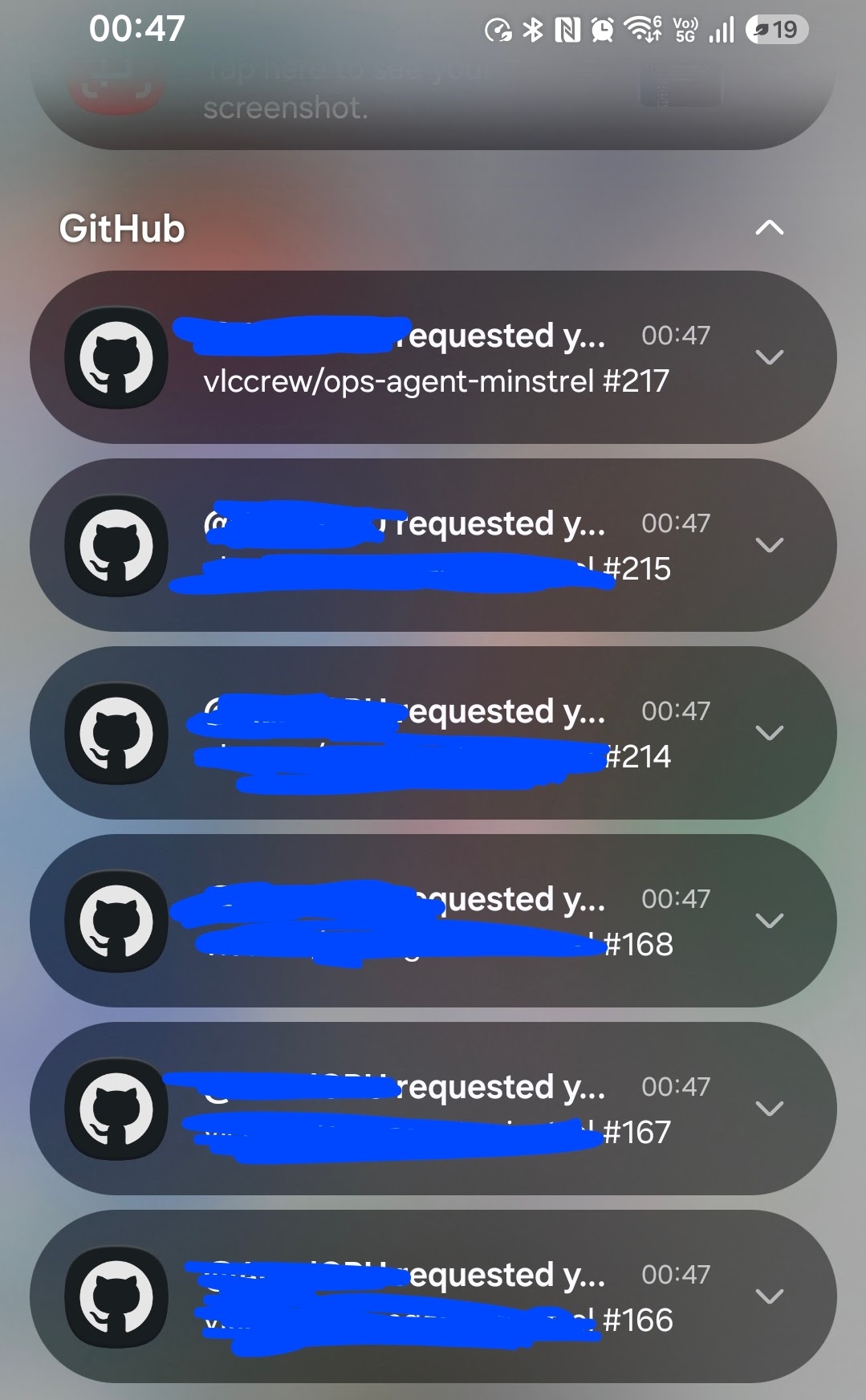
I started writing this as I was wrapping up reviewing 3 slop PRs at 11PM on a Saturday night after a week of reviewing another 25 slop PRs so I hope you know that I’m writing this with frustration.
What are stacked pull requests?
Let me first introduce you to the concept of pull request–assuming that you’re not familiar. If you are, just skip this and the next 2 paragraphs. In software engineering, there’s this thing called version control that is used to keep track of how the code base changes over time. Think of it as a history of when each feature was added. There could be multiple branches to this history. For example, a version of software is stored in its own branch of the history and that branch is frozen when that version is released to the user so development can continue without affecting the released software.
When implementing a feature, a developer would branch out from the main branch into their own branch, add the feature, then use a pull request (PR) to merge that feature into the main branch. In essence, a PR is a request for permission to add the new feature you coded. A PR is usually made on a remote (online) repository of the code base and another developer is asked to review it to make sure that no bug is added to the main branch. Once the reviewer approves the PR, the feature branch is merged into the main branch’s history. I hope you now have a rough idea of how PRs work.
Occasionally, the feature branch history would become out of sync with the main one because someone else merged their PR. One way to make sure that your branch’s history and the main history are in sync is called rebasing. In short, it puts all the changes you made (commits) at the end of the main branch’s latest version.
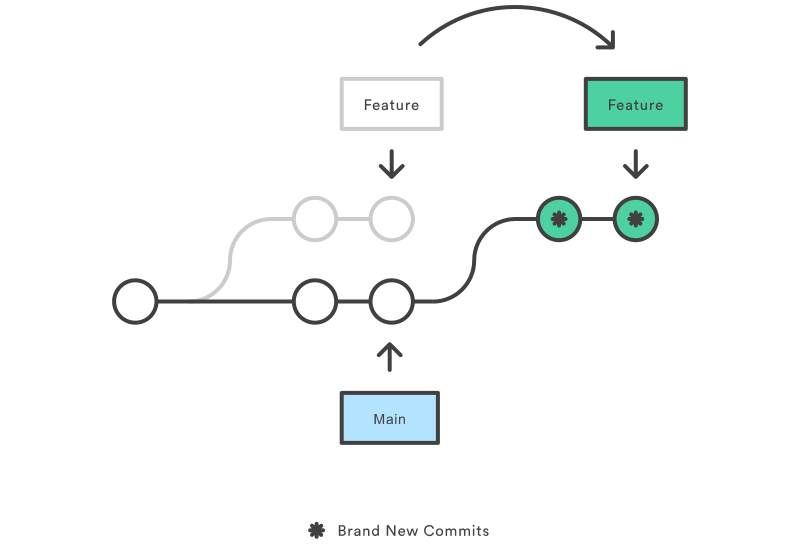
So, what are stacked pull requests then? Stacked pull requests are a collection of PRs that are created on top of each other. For example, you branch out to branch A to add feature A on top of the main branch. Then, you branch out from branch A to add feature B in branch B. Then, you branch out from branch B to add feature C in branch C. This can go on forever. After all the branches are created and the features are implemented, you can open PRs such that branch C merges into B, B merges into A, and A merges into the main branch. As mentioned earlier, you can have as many PRs in a stack as you want. The biggest stack I’ve seen contained 11 PRs.
As far as I can tell, having stacked PRs allows you to auto-rebase all the PRs (assuming that there’s no conflict) and merge every PR in the stack with a single button press (still assuming that there’s no conflict). This alone sounds like it’s a feature that improves the quality of life of developers worldwide, but I think it actually has the opposite effect: Making the lives of developers hell. Well, ones that still care about the software they create, at least.
Why stacked PRs are a dopamine hit for vibe coders
Vibe coders specialize in one thing: volume. They are very good at generating a lot of code. They can have 10 Claude sessions implementing 10 different features and generate thousands of lines of code within a very short period of time. They can also have a Claude agent implement a series of features while they go sleep or play video games for a couple hours. So, they realistically could easily open 10 PRs stacked on top of each other while doing something else, then come back to press one button to merge it all. I know it feels amazing because it’s exactly like crossing off multiple entries in your to-do list at the same time.
This assumes that you are a vibe-coder, though. This means that you describe a feature to an LLM, it generates code for you, and you accept it as long as it works. Although you can add features very quickly due to how fast LLMs are at generating a large volume of code, there is one small issue with this: Volume says nothing about quality.
Why stacked PRs are a headache for sotware engieers
I honestly could’ve named this section “Why I despise this feature with burning passion.”
As I’ve mentioned before, a pull request is usually reviewed before it is merged. The issue is, that reviewer is yours truly. When someone asks me to review their 10 stacked PRs, what I really see is them saying “Claude generated all this for me. Please see if they’re OK or not.” I think it is different from when someone asks you to review a PR one by one. When someone asks you to review one PR at at time, it feels to me like that they/an LLM wrote the code, created the PR, and they had a look over it before requesting the review from me. Of course, it is possible that the PR author went over all of them before requesting the review from me at the same time. However, I can say with almost full confidence that it is just them asking me to check their AI slop code in my experience.
As much as the frontier models have improved over time, I still see Claude Opus 5.5 run into the same pitfalls that its predecessor, Opus 4.5, ran into: Excessive commenting, copious amounts of duplicate local functions, over-complicated code, etc. I’ve seen numerous talks about how AI will keep getting better and these problems will go away, but we don’t exactly live in the future–we live in the present. Even if these promises will eventually come true in the future, it is not true right now and these problems still exist. And it’s exactly because of this that I still go through the PRs I was requested to review myself.
Of course, this isn’t only applicable to stacked PRs. Being asked to review parallel PRs created by the same guy(‘s Claude) gives the same vibes of “Claude generated this. Review, please,” but at least you don’t have to deal with the dependency issue that comes with stacked PRs. Since stacked PRs are implementing a sequence of features, it means that each feature depends on the feature before it in the stack and the code changes usually happen around the same place. This causes a merge conflict. In short, a merge conflict happens when two branches are trying to change the same chunk of code and the version control doesn’t know which change to use. This happens quite often with the stacked PRs I’ve reviewed.
Consider a stack of PRs A and B where B merges into A. I tell the author that they need to change something in both, and the author applies the fixes I requested. The issue is PR B’ new code is based on PR A’s old code. So, after PR B’s fixes are implemented, it also has to rebase onto PR A’s new code. A merge conflict could happen, or the change in A could be so big that B needs to change its code again into its third version. This is just an example with a stack with 2 PRs, but you can probably imagine how badly it scales with bigger stacked PRs. I also want to note that this is coming from a real-life example with a bigger PR stack. In fact, it is exactly because of that stack that I decided to write this in the first place. I have never hated this feature this much until I met that stack of sloppy PRs.
An anti-AI person would probably say, “You caused this when you started using AI in your work,” while a hyper AI supporter would probably instead say, “Why do you still review the code yourself? Just have an AI review it!” I can see why both would say their respective things. I use Claude because the amount of work asked of me has increase significantly. Claude does make me get more things done, just not the exponential speed-up seen in AI bros who don’t even know how the code works. I still do read the code, believe it or not. Also, yes, I do use Claude to review the code. I use it to flag issues then review the issues myself. However, I still find issues with the code that Claude hasn’t been able to catch, usually related to code organization and complexity, so I still feel the need to read the code and do some manual review on top of Claude. I’m just doing my job as an AI-assisted software engineer.
The guy who requested reviews on all these PRs, on the other hand, doesn’t seem to be doing his job. Specifically, he is more like a meat proxy than a software engineer. It feels to me like he just throws the requirements at Claude, have it implement it, create the PRs, and ask me for a review. I’m probably doing his job harder than he is. The execs probably love him because of how many features he is able to implement, but he is just pure headache for me. No amount of Thai inhalers will heal me from this.
At the end of the day, I think that this post is equally a stacked PR rant as it is a mass AI slop PR rant. I hope you never have to experience this. Thanks for reading. Good bye.
Also, in a stroke of absolute divine irony, I got this notification as I was writing this post. What a way to wish someone a good night.